- When:
- Sunday, Feb 15 2026, 3:00pm - 4:00pm PST. copy to my calendar, iCal export
- Where:
- Fort Worden - Joseph F. Wheeler Theater 25 Eisenhower Way, Port Townsend, WA 98368 (map)
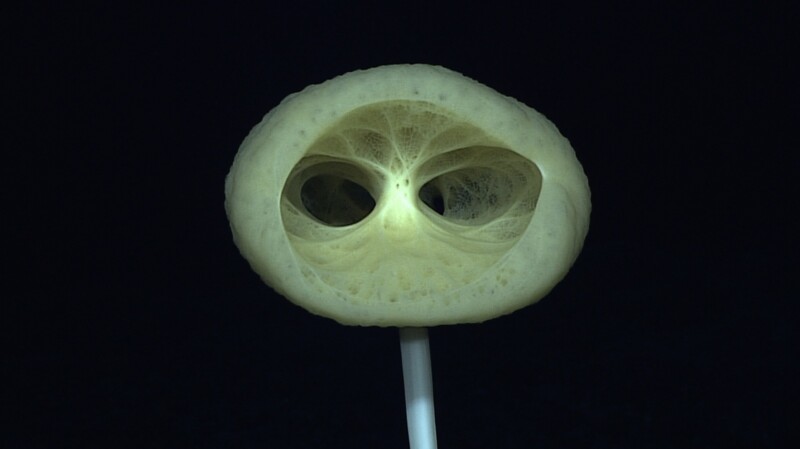
The animals that inhabit the deep ocean are the most poorly known group of fauna in the world. This is particularly true of glass sponges in the class Hexactinellida, which are very important members of deepwater communities. Glass sponges provide homes to all types of deepwater invertebrates and have formed amazing sponge reefs off the coasts of Canada and Alaska. As their name implies, this group has skeletal parts, called spicules, that are made of glass. Glass sponges evolved in the Cambrian period, hundreds of millions of years before the dinosaurs and are very different from any other type of animal. They come in a mind-boggling variety of body forms and their spicules represent nature’s finest glass art creations that surpass anything we humans could make. These ancient and incredible animals have many other fascinating characteristics that will be introduced in this talk.
Dr. Christopher Kelley retired in 2018 after 18 years as program biologist for the Hawaii Undersea Research Laboratory (HURL) and graduate research faculty in oceanography at the University of Hawaii. He led deep-water research cruises, fisheries projects, and a video annotation lab identifying deep-sea fish and invertebrates from submersible and ROV footage. Two deep-water species—a seastar (Apollonaster kelleyi) and a coral (Crypthelia kelleyi)—have been named in his honor. After moving to Port Townsend in 2019, Dr. Kelley has volunteered with the Port Townsend Marine Science Center, Wooden Boat Festival, and Jefferson Land Trust. He continues to support Pacific research cruises as an onshore scientist and works on deep-water glass sponge identification and new species publications.
Our lecture series, The Future of Oceans, draws on the commitment of professional researchers and educators across all academic spectrums to help define and inspire the health of our oceans.
This event is FREE - Thanks to the Darrow Family for their ongoing support.